[00:00:09.260] - Gordon
Hello.
[00:00:10.070] - Taylor
Hello.
[00:00:10.520] - Gordon
My name's Gordon from Drayson Design.
[00:00:12.290] - Taylor
And I'm Taylor from The Creative Tinker.
[00:00:14.210] - Gordon
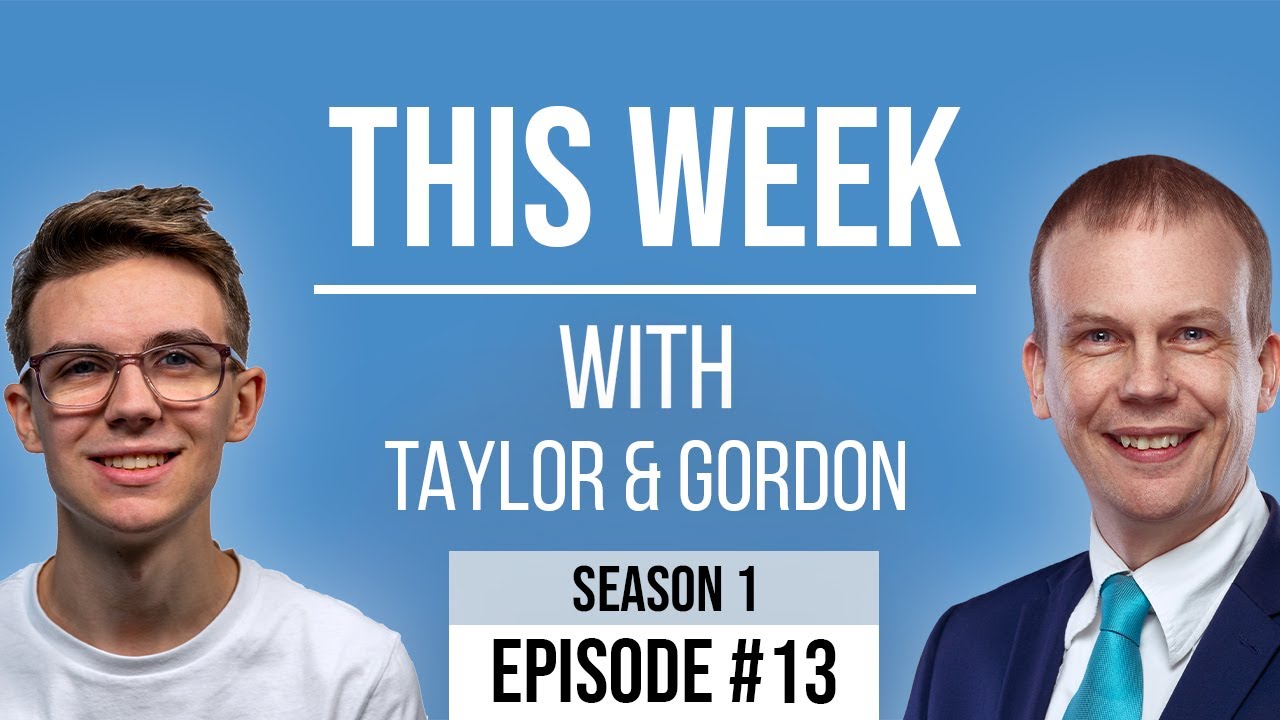
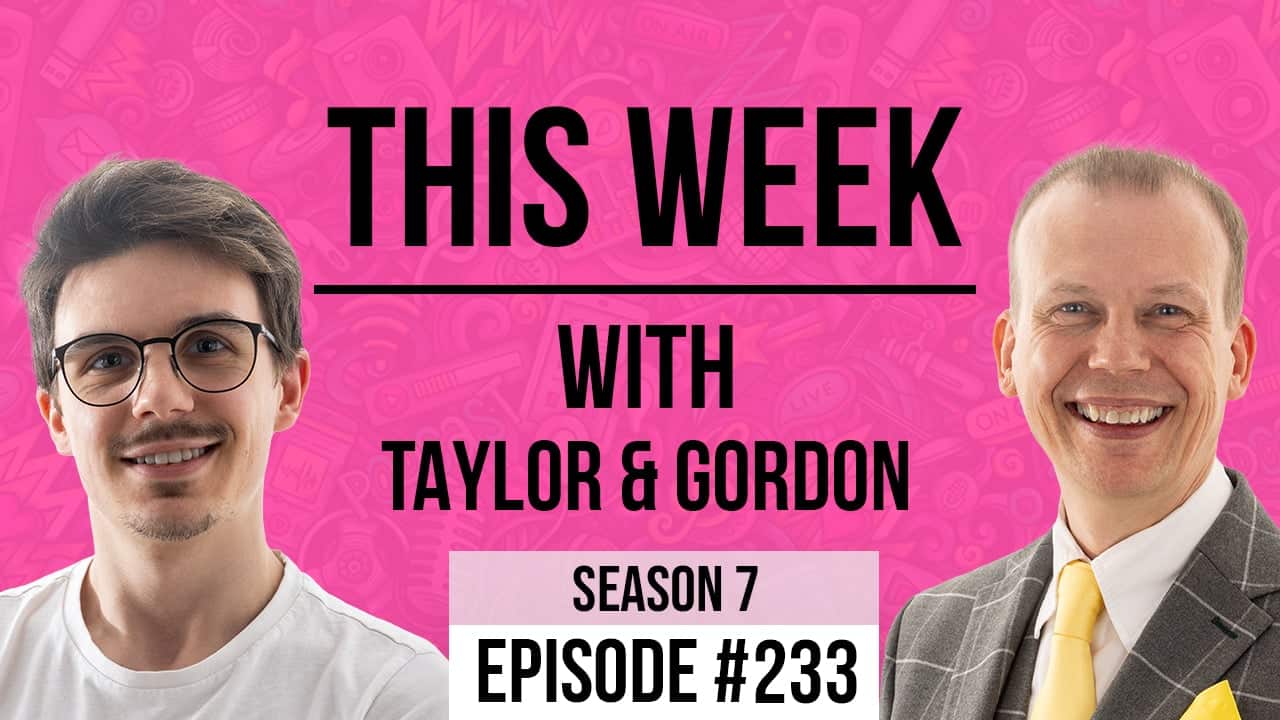
And welcome to "This Week With Taylor and Gordon." This is a weekly podcast or vidcast looking back at the last seven days to see what we've been doing in our businesses. So, I've discovered that this week has been sort of, it's felt a little bit like I haven't actually achieved anything. But looking back and sort of making a list of all the things that I did actually do, there's lots of longish tasks that have been waiting to be done for a while. And so you sort of remember one or two of those and you think, well, I haven't actually done anything, but they do add up. And I found that there's been actually quite a lot that I've done over the last week that is sort of a little bit mundane, if you like. Not something creative, not something exciting, not something big, but lots of sort of tasks that have been meaning to be done for a long time. And I've sort of managed to just tick them off my checklist. Do you ever feel like you haven't achieved anything?
[00:01:18.050] - Taylor
Yeah. So I, if I'm in that situation, what I normally do is I normally do the kind of, I call them quick wins, and it's basically kind of doing the quick little tasks, kind of quick tasks that, you know, take probably 10 to half an hour, ten minutes to half an hour, but just need doing. And in my brain, that kind of gives me boost and motivation to kind of want to do the bigger tasks, because I never want to do a big task, which kind of like is designing a website or something like that, or kind of getting stuck into a specific feature, if I'm not motivated because I know that I won't produce the best quality work.
[00:01:56.480] - Gordon
Or not in the zone, because quite often you get sort of, you get to a point when you think, "right this is going really well," and you want to keep going because you're in the right frame of mind to do it. And, you know, when I started, I used to get interruptions with phone calls, you know, people ringing me all the time, which is why I ended up doing quite a lot of my work in the evening when people didn't call and it meant I could just get on with stuff. And I know you do the same because I regularly notice your light is still on.
[00:02:26.120] - Taylor
Yeah.
[00:02:26.600] - Gordon
Late at night.
[00:02:27.440] - Taylor
So I don't actually get calls that often because I keep my phone on do not disturb.
[00:02:32.790] - Gordon
So do you get more video calls these days?
[00:02:35.420] - Taylor
I schedule them in normally by email and I have video calls, kind of like using Zoom and things. But I just find that, you know, putting 'do not disturb' on, I can get more work done. And also, an interesting kind of fact, I guess, is I haven't had social media notifications on; so that's Facebook, Snapchat, what else? Instagram, Twitter. I haven't had them on for I think about three years or so now. And I haven't really looked back. I mean, the first week or two weeks was very difficult because you kind of have FOMO, which is like Fear Of Missing Out. But after that, you kind of get used to it, and it's quite nice.
[00:03:12.500] - Gordon
And it probably puts you back into control, doesn't it? And allows you to go into social media when you want to.
[00:03:18.170] - Taylor
Yes.
[00:03:18.710] - Gordon
Rather than when a notification pops up and you think, "I must look at that."
[00:03:22.710] - Taylor
Yeah, exactly. And it's quite nice because I can kind of look at my phone when I want to. I mean some of my friends probably think I fall off the edge of the Earth really because I don't reply for like three, five, six hours because I'm enjoying working and I'm in the zone, I don't want to lose that kind of momentum. And so, you know, I'll reply, you know, whatever time I finish, sometimes midnight or so and they're long gone asleep. So I reply and I get a message in the morning. But, you know, I like that because it means I can get as much work done as I can when I'm in the zone because they say that it takes 21 minutes or something like that to get, regain your focus. So if you lose focus from, you know, just a small text message someone just saying a small thing, you've lost your focus and it takes a certain amount of time to get back into that. And by that time, you could get another notification so.
[00:04:17.750] - Gordon
That's true. And I I guess that if you get sidetracked, as you said, it takes your focus off what you're doing. And by cutting out these notifications, it doesn't necessarily stop you losing focus, but it definitely will lower the number of interruptions you have.
[00:04:36.260] - Taylor
Yeah. I agree.
[00:04:38.470] - Gordon
So this week, I thought I would continue talking about video because it's such a vast subject and I spoke quite a bit about it last week, but there's more to cover. And I thought I would just focus on a couple of things this week. The first one is streaming to multiple places. So what I mean by that is that when you go live and you stream, you can actually set up an 'RTMP' feed. Now, it's a bit technical, but basically it's a feed that's in a particular format that allows you to send it to more than one place. Now, there is software that we use and the software that is available, that allows you to stream to all sorts of places. Originally, this technology came in for gamers.
[00:05:28.450] - Taylor
Yeah.
[00:05:29.110] - Gordon
So gamers would sit on their computer and they'd play the latest video game and they would stream it to "Twitch" or "Discord" or...
[00:05:38.860] - Taylor
YouTube was quite a popular one.
[00:05:39.700] - Gordon
YouTube is another one. And other people would tune in and watch them playing a game. It's, it seems quite weird when you think about it, but it's a little bit like sport. You have spectators for sport. You go and watch a football match, you watch a football match on TV and it's very similar.
[00:05:59.140] - Taylor
Yeah.
[00:05:59.470] - Gordon
I mean, it's not something that I've spent a lot of time doing, but I know there's an awful lot of people out there that do. And and now that you can stream with headphones and a microphone and you can talk or sort of commentate, if you like, over what you're doing, it's made it a lot more interesting. Rather than just watching someone running around, shooting people or building things with green blocks. But that's where the technology, I think, got its mainstream appeal from. And now we use "In Video." Uh, no, sorry, I lie, that's a completely different software. We use "Restream." Thank you. We use Restream. And this allows us to stream both to Facebook and to YouTube at the same time with one feed. Now, the main problem you would have originally is that if you were trying to stream to multiple places, you would find that your bandwidth on your home internet or even your work internet would be bombarded because you're sending it to lots of different places. So by doing it the way we're doing it, you're sending it to one place and that place is then sending the stream out and distributing it to different platforms. Now, we could if we wanted to, send it to other platforms, there's others included in the subscription that we have. I think you can do it to Twitch. You can do it to Instagram in some respects. I'm not sure, I've never really looked into it, but you've got a limited time, I think, on that.
[00:07:35.920] - Taylor
But it allows you to reach a larger audience.
[00:07:40.210] - Gordon
Well more importantly, you can reach people on the platforms that they're on.
[00:07:44.620] - Taylor
Yeah.
[00:07:45.100] - Gordon
Without having to...
[00:07:47.230] - Taylor
Migrate them.
[00:07:47.890] - Gordon
Migrate them or pull them into the platform you want to be on. And that is all, that is pretty much what marketing is all about, making sure that you reach your customers in the places that your customers are, which is why you have adverts on TV because, you know, people are going to be watching TV.
[00:08:04.990] - Taylor
Something I found quite interesting is you will never see an advert on TV for any sports cars, Lamborghini, Ferrari. You will never see them with an advert on the TV. The reason, because the people that buy Lamborghinis and Ferraris don't sit at home during the middle of the day watching TV.
[00:08:24.520] - Gordon
Yeah, so it's targeted based.
[00:08:27.070] - Taylor
Yeah.
[00:08:27.070] - Gordon
And in fact this is interruption advertising is something I'll make a note of because that's something I would like to talk about in another video. But sending it to different, back to where we were sending it to... Oh pardon me. Sending it to different platforms so that you are going to your customers rather than having your customers come to you, is the reason that these are so popular. And we are trying, we're in talks at the moment to try and figure out how to get the stream going to our website as well, so if people don't want to log in to Facebook, they don't want to go to YouTube and create an account, they can just go to a website and watch it, as it happens live, is great. Although, it's not entirely possible at the moment. But it's something that we're looking at doing for that very reason. So that's the first thing I wanted to talk about. So just think about how that might affect your business, how you might be able to use it. You can, we're streaming from a phone and a laptop, but you can stream a live video from your phone to multiple places using technologies like "Restream."
[00:09:44.350] - Taylor
Something similar to, although it's not video, is you can use apps and things to share and distribute your content to different social media platforms. So you can I mean, there's quite a few popular ones like "Buffer" and things like that, where you can share your kind of social media post to Facebook, Instagram, Twitter all with the click of a button, which is kind of a similar concept.
[00:10:09.730] - Gordon
Yes. I'm not entirely sure that is a good thing to do, though. I think your message on different platforms should be different, depending on the viewers.
[00:10:20.610] - Taylor
Yes, so I was talking about kind of the scheduling, you can schedule your posts.
[00:10:23.440] - Gordon
I see what you're saying.
[00:10:24.620] - Taylor
To distribute, but you can set them per platform. Kind of.
[00:10:27.310] - Gordon
Yeah. So yeah, just think about how you can do that. I mean it blows my mind that I've got a drone, I've got a "DJI Mavic," and I can send that up into the air and it can be sort of, I don't know, 700 feet above me and I can live stream that to Facebook and YouTube at the same time live, and I can have headphones in and talk and commentate as well. It just, I mean this sort of technology is just moving at such a pace and the internet getting faster and faster is allowing for this video content to be to be available to us.
[00:11:11.330] - Taylor
Yeah.
[00:11:12.130] - Gordon
So that's the first thing. The second thing I wanted to talk about was subtitling of videos. I did touch on it last week. Subtitling of videos is something that you will see if you go to Facebook, for example, and you're scrolling down your feed and you'll see there's a video and all of a sudden you can't hear it, but it auto-plays and you can see the words coming up. That means that the person who's published that video has added subtitles, and it's to gain people's attention, to make you stop when you're scrolling and go, "oh, this looks interesting," and then maybe see a few words that maybe pique your interest and you think, "oh ok, I'd like to know about that." And then you click on it. And that has been tested. And I mean, it doesn't really need testing. You can tell just by the fact it's interactive that it's going to get a lot more viewers than just a static frame that says, you know, "play." And...
[00:12:16.050] - Taylor
Yeah.
[00:12:16.590] - Gordon
So subtitling is really important. It's also important if you've got a very broad accent maybe, so that, I mean Americans always complain about a lot of our regional accents and how they just can't understand them. So having subtitling will show them what we actually are saying, rather than what they think they can hear. And...
[00:12:39.990] - Taylor
Yeah.
[00:12:40.470] - Gordon
It's quite difficult. I don't know if you've ever tried listening to something where you're not entirely sure what they're saying, maybe the audio is bad or the accent's strong or. And you think, you're concentrating so hard on the words that you're sort of missing the meaning behind them. For me, whenever I'm watching anything to do with Shakespeare, I'm always concentrating so hard on the words that they're saying and trying to understand them that they're sort of two, three sentences ahead of me. And it doesn't make sense to me, and I always struggle with Shakespeare, watching Shakespeare because of that. Now, there are lots of options for you here as far as subtitling goes. There are people who, and services, that will take your video and they will manually have people sitting there typing in subtitles and attaching them to your video for you. Now you can have your subtitles either burnt into the video, which means they're always going to be there, or you can have them as a language subtitle so people can choose different languages and choose their own language so they can understand your video, which means that your video can then go to a much wider audience.
[00:14:00.039] - Taylor
Yep.
[00:14:00.660] - Gordon
But you need to prepare for that.
[00:14:02.590] - Taylor
There's automatic subtitling.
[00:14:04.630] - Gordon
Yeah, good point. So on YouTube now they have automatic subtitles and they can do that on a live feed as well. If you're on YouTube now, just click on the subtitle button and you'll see it's coming up. It's not always accurate and it is delayed a little bit because they have to process the speech. So if you are ever going to do a video that's really important or one that you know is going to be seen for a period of time or by lots of people, then it's always worth getting a manual subtitle created so that you can put that subtitle onto the video, and it's accurate and doesn't come up with weird words every now and then. Because sometimes you've got industry words that are just not recognised by the speech to text technology. There you go, that's probably ruined the subtitling, me just saying that. One other thing that's really important with subtitling is, if you are going to have the, if you're going to go to the effort of having it manually subtitled and typed in, you can then use those subtitles as a transcript.
[00:15:24.000] - Taylor
Yeah.
[00:15:24.270] - Gordon
And that could go in the in the description of a video. So that will be picked up when people do searches for keywords. You can also use those transcripts as blog posts or social media. You can pull things out of it. You can create little snippets of your video with the text around it. And by having the text rather than just the audio, you are then making your video more SEO friendly.
[00:15:56.820] - Taylor
And accessible.
[00:15:57.810] - Gordon
And accessible to other people.
[00:15:59.280] - Taylor
Some people don't like watching videos. And for example, on Facebook, I know a lot, I mean I personally do it, is I would prefer to just sit there and read the kind of subtitles because of the situation I'm in. I may be in public or something, and a video and I don't have any headphones.
[00:16:15.180] - Gordon
Or you don't have headphones. Yeah, exactly.
[00:16:16.620] - Taylor
And it's not appropriate. But, you know, with the subtitles, I can still get the exact gist of what the video is.
[00:16:24.450] - Gordon
And get the knowledge from it, if it's a training thing or tutorial thing or something you're just interested in.
[00:16:30.090] - Taylor
And then you can also, a lot of people do as blog posts. If they record a video, they put a transcript in because some people don't like watching videos. I mean, I know quite a few times that I'd rather do a 'command F', which is kind of a search through the whole of the page and find the keywords that I'm looking for rather than scrub through a video.
[00:16:49.290] - Gordon
Yeah, and by having that, you're going to add to your SEO, as I said before, because the text will be picked up by Google. And then if people are searching for whatever your video is about, that will then come up in the search results because you've got the text already done. So it is it is worth it for certain videos if you think it's important, or you want it to be found, subtitle your videos. So there you go, top tip for today, subtitle important videos.
[00:17:18.530] - Taylor
Good.
[00:17:19.070] - Gordon
What have you been up to, Taylor? What do you want to talk about today?
[00:17:21.290] - Taylor
So, I mean, mostly this week is kind of starting, finishing old projects or coming to the end of...
[00:17:27.530] - Gordon
Current projects.
[00:17:28.580] - Taylor
And starting new projects. So I'm in the process of designing a mock up of a website, which I can then send to the client for them to approve, before I start building it.
[00:17:40.070] - Gordon
Yeah, we spoke about that before.
[00:17:42.260] - Taylor
What else? Yeah, mostly just finishing and starting new projects and kind of back and forth and with emails on kind of confirming projects, confirming quotes.
[00:17:50.990] - Gordon
And we do this a lot actually. Whenever I say to Taylor, "what have you been doing?" It's, I mean it's very similar, the day to day stuff with the sending quotes, starting new work, talking to clients about what it is they're looking for. And these things happen every day for us. And sometimes that's all that happens in the day. You could find that you start work in the morning and by the evening you haven't actually started anything because you've just been doing, dealing with quotes and admin and replying to... I mean there is, don't get me wrong, there is work that's been done, but there's nothing maybe that you've planned to do or that gets done.
[00:18:26.660] - Taylor
Or to show for it really.
[00:18:27.360] - Gordon
Or to show for it, yeah.
[00:18:28.710] - Taylor
A lot of times I say, "ok, I want to do this today," but something comes up where someone needs something urgently that needs to be done that day, or I get a new quote in and that takes kind of...
[00:18:41.510] - Gordon
Precedence.
[00:18:42.410] - Taylor
Priority, so I've got to do that instead. So yeah, it does vary, although the projects can vary, which is what makes it interesting. Each project is different. You could do two electricians' websites and they will go completely different directions without...
[00:18:57.680] - Gordon
And they should.
[00:18:58.470] - Taylor
But in terms of what they're trying to gain, in terms of how they want it to look, how, what they want from the client.
[00:19:06.200] - Gordon
What the goal is for the website.
[00:19:07.670] - Taylor
You know, some people just may want like a basic contact form, some people may want a full on quote, like I have on my website where I have a big quote form created to get more information. So, yeah, I mean, talking about contact forms, there's a really fine line trying to get it right, because you've got so many things to think about. When people go to a contact from or want to contact you, it needs to be easy. So you have to make contacting you as easy as possible for you. So this is putting them in kind of well known and kind of, I don't know what the word is, kind of established places. They're not written rules, but lots of people know or kind of go there and assume that you'll have something there. So, for example, a lot of people have it in the header. So on a desktop site, you might see a email or like a phone number in the footer of your website. Lots of people look for email, some type of contact details and also a contact page. So making sure these are very easily defined. Like we said a couple of weeks ago, you know, you have 15 seconds for people to figure out who you are, what you do, and find the information that they are looking for. So, yeah, making sure people can find the contact details they're looking for. And then when they get to the contact form, making sure that it is as easy as possible for them. So, not having complicated fields, making sure each field has one purpose and to get one piece of information, whether that be like a logical "which service do you need?" And based on that, then you get different parameters and text fields that you need to fill in. But making sure it's as simple as possible, and you only ask for information that you actually need and not just because everyone else has it. So, for example, if you had a contact form, which is just a basic 'name,' 'email,' and kind of 'message,' if you don't need a subject, don't put a 'subject' in there. If it doesn't matter, don't put in there. It's just an extra field that can stop someone from filling in a form because it's too many fields. A study was shown that the best converting contact forms have five input fields. So, you know, if you can try and keep it to five or below if it's kind of a basic form, that is kind of important. And also don't make every single field kind of required because that again, will push people away, because some people may not want to give you their phone number. But, you know, you need some sort of contact. So maybe say, "yes, I need your email," but you, optionally you can give me your phone number as well. So making sure that your fields are optional, some of them are optional, if they are. And then also kind of thinking about the journey. So, you know, if you've got a big like quote form, for example, and it's got 20 form or text inputs, making sure that it's not 20 kind of questions in a row, you know, split it up with using a step form, for example, which asks, which kind of splits them into categories, which would be 'name and contact details,' kind of 'about your project' maybe, and then kind of the 'budget' and anything else, 'any other required information' or 'additional information' that would be useful to know. It really helps because people, if people see 20 different text inputs or input fields, that they have to fill in, they'll go "ugh, no this is way too long." If they see, you know, three to five and then there's a 'next' button and then there's another one to five, you know, it's a lot less daunting to fill in and a lot nicer way.
[00:22:52.150] - Gordon
And also because they filled in the previous fields, they're sort of invested in the form filling and sort of getting to the end of it now, because they've already invested time in it.
[00:23:01.510] - Taylor
And, you know, on mobile, for example, having a big, big, long list isn't going to be, isn't going to look nice, and isn't going to be user friendly. So thinking about that as well. And also the colours that you use kind of, don't use a green button for the back button, for example, because that's kind of counterintuitive, because green is to go forward and red is normally kind of 'warning' or kind of 'cancel,' if you would say. So, kind of thinking about colour choices, you know, if you've got a white, if you've got your contact form on a white background, don't use a really, light grey colour for your text labels. You know, don't make it hard to read because the more work they have to do, the less likely you're going to get to convert them.
[00:23:44.410] - Gordon
So the funny thing is you brought this up this week, is that just yesterday I was watching a video about I think it was seven different things, 10 different things, something like that, that people do that are wrong with their forms, things like putting the placeholder text as the field title. So having, for example, first name inside the field as a placeholder so that you know what to type. The problem is when you start typing it now, you can't see what that field is because it doesn't have a label anywhere around it, that sort of thing. And I'll put a link to that in the show notes, because if you are starting to do a form or you have a form already, have a look at this video, because I think you'll find there's an awful lot of sense that is talked about in it and it will definitely improve your forms.
[00:24:39.280] - Taylor
Yeah, I think that's everything then from me.
[00:24:42.390] - Gordon
Everything for you? OK. I think that's everything from me. So, as always, thank you so much for watching, if you've got to this point. You can find us on our social media, Taylor do you want to tell them about that.
[00:24:54.450] - Taylor
So you can find us on Facebook, where we stream directly to Facebook using our Restream app, as well as YouTube. You can go there and subscribe and you should get a notification, if you put the little bell on, when we go live, if you don't watch us on Facebook. And yeah, we have our website: thisweekwith.co.uk, which is where you can find a list of all our past episodes in a nice to see and easier to, easier way to find basically than looking for YouTube and Facebook, and they will have all the show notes and kind of listed out for you.
[00:25:31.140] - Gordon
And they've got links to podcasts as well. So you can subscribe from there. You can also watch the videos. So you can do everything on the website. I think that's everything Facebook, YouTube and the website. So thank you very much for watching. My name's Gordon, I'm from Drayson Design.
[00:25:47.370] - Taylor
And I'm Taylor from The Creative Tinker.
[00:25:49.470] - Gordon
We'll see you next week.
[00:25:51.210] - Taylor
Goodbye.
[00:25:51.630] - Gordon
Goodbye.