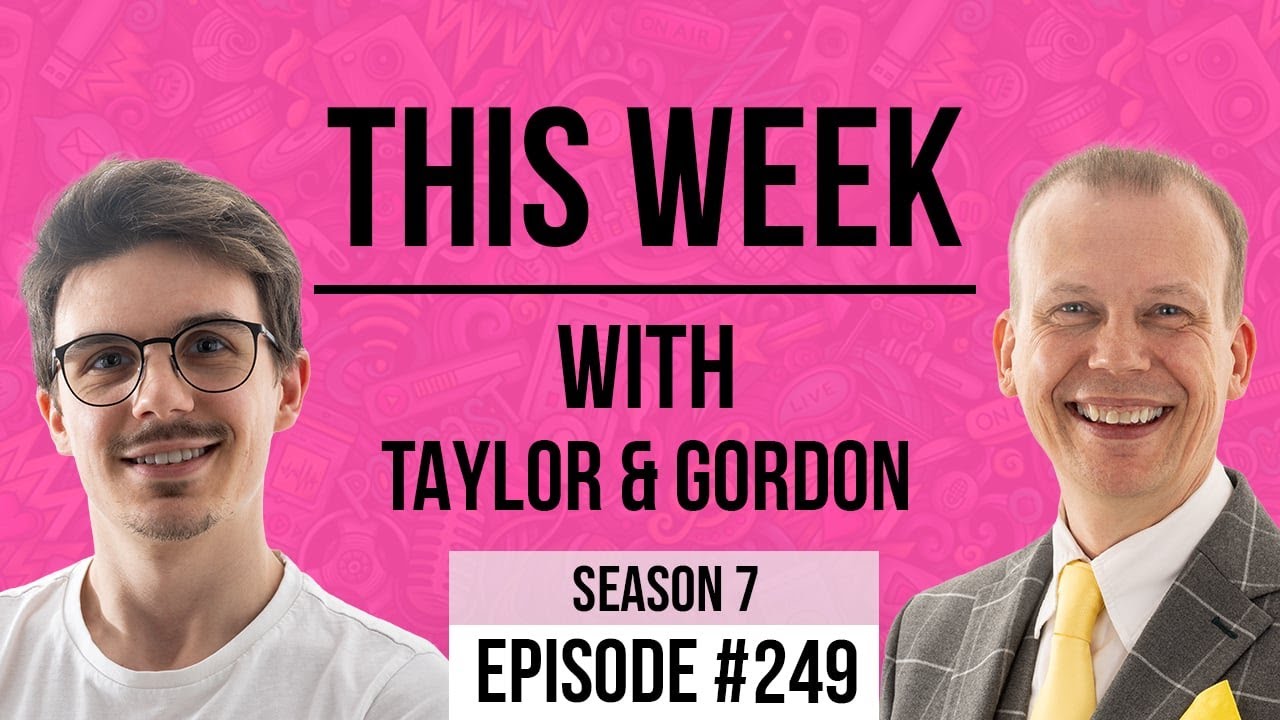
[00:00:09.05] - Gordon
Hello.
[00:00:09.27] - Taylor
Hello.
[00:00:10.10] - Gordon
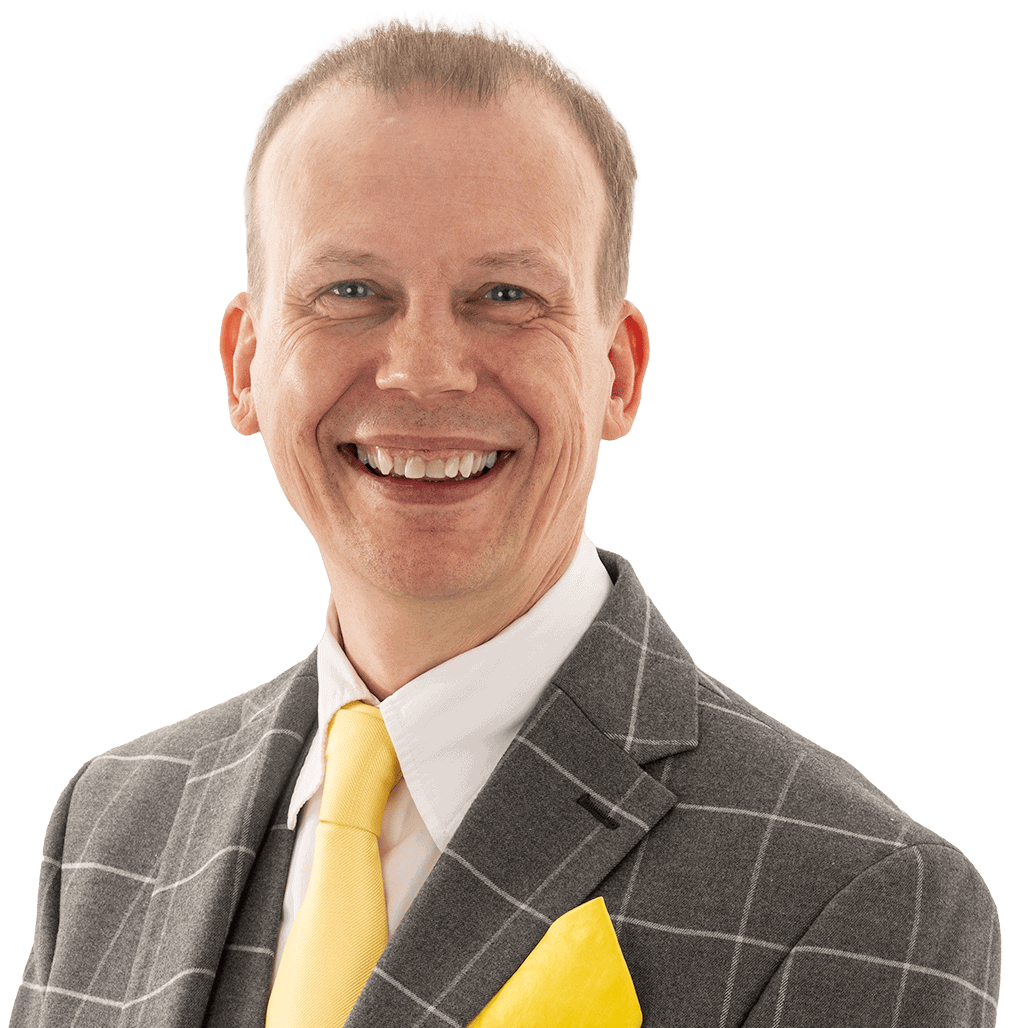
My name's Gordon from Drayson Design.
[00:00:12.02] - Taylor
And I'm Taylor from The Creative Tinker.
[00:00:14.02] - Gordon
And welcome to "This Week with Taylor and Gordon," a weekly podcast and vidcast where we talk about things that have affected our businesses over the last 7 days and thank you for joining us.
[00:00:24.07] - Taylor
Welcome back.
[00:00:24.29] - Gordon
It's been an interesting week for me. How's your week been?
[00:00:29.13] - Taylor
It's been good.
[00:00:29.26] - Gordon
Any news from your side?
[00:00:32.15] - Taylor
I don't think so.
[00:00:33.10] - Gordon
We had WWDC, which happened, I think, 2 Mondays ago now. So lots of new software announcements for the upcoming iOS and macOS 27, which is all very exciting. Looks like Apple are finally starting to get serious with AI, which is very good because they've been a little bit behind up to now, haven't they? So we shall see how that happens. If you are a developer, you can get the betas now. And if you are wanting to test by public, they are coming, I think, next month. So you'll be able to download those. They always recommend not to use it on a production device. So don't use it on your main computer or your main phone. Let's get straight into our topics. Would you like to go first or shall I?
[00:01:25.05] - Taylor
You can go first this week.
[00:01:26.12] - Gordon
So, today I would like to talk about learning a new skill. Now, my new skill for this week was something I've been wanting to do for quite a while now, and I've been quite fearful about starting it. It's funny, it's one of those, it's one of those tasks where you look at it and you think, oh my goodness, "it's such a huge thing to learn. Where do I start? I don't know, so I'm not going to start." Do you get that every now and then?
[00:01:56.25] - Taylor
Yeah.
[00:01:57.13] - Gordon
So this was 3D modelling in respect of making models for 3D printing. So I've had a 3D printer now for several years and been making lots of amazing 3D prints and using them and giving them to friends and family and making really useful things. In fact, you've got quite a few here in your kitchen in particular that I can see from where I'm sitting. And they sort of, they make your life a little better. And you know that if anything happens to them, you can just 3D print a new one. And sometimes you can print things that you just can't buy because they're just not available.
[00:02:40.15] - Gordon
But one of the things that I've always wanted to do is to make my own models and be able to print what I want to print. So I get to design it as well. But that requires me to learn 3D printing and 3D— sorry, 3D modelling. And that is a huge subject. I did try once before and I loaded up the personal licence version of Fusion, which is completely free. You can download it for personal use. And I thought, "I'll have a go with that." And it's such a huge program. Have you ever tried?
[00:03:11.23] - Taylor
Yeah.
[00:03:12.20] - Gordon
Okay. There's so much going on with that that I just— I got completely overwhelmed and just stopped. But my partner's father brought home a metal bathroom holder. It's like a rectangle with semicircle ends, like a pill-shaped sort of box, if you like, made out of metal. And the idea is it holds two bottles, hence the round circly bits at the ends. Which will be soap or shampoo or something like that. I don't know what it was because I didn't have the bottles. I was just given the metal object and said, "can you make this in 3D printing? We'd like it to be blue." And it's like, "Ummmm maybe." So I sort of, I sat down and thought, "right, I'm going to give it 3 hours, see if I can do it in that time, see if I can learn enough," because it was quite a simple model. It was just like a base and then sides that came up, so you could just then put things into it. But I knew there were going to be several things that were going to trip me up. So, for example, the original was made of metal, so I knew that the walls of the box, if you like, were going to be quite thin.
[00:04:40.16] - Gordon
And with a 3D printer, they need to be thicker because it's plastic and it's not metal. It also had like a lip at the top, which I— the only reason I could see that being there is to help you lift it, but I'm guessing if you're putting bottles into it, it's just to keep the bottles together. So that I didn't see as being a major issue. I wasn't going to try and figure that bit out, but I wanted to make sure it was going to be the right size, and that's where everything was quite crucial for me. So, uh, what I did is I took an overhead photo of the existing metal container, and I opened up Fusion, and I looked up some instructions and some YouTube tutorials to find out how I bring a picture into Fusion. And that was quite easy to do. The one important step if you're going to do this is you have to— and I can't remember the exact word— um, you have to... What is the word, Taylor? It begins with C when you are calibrate. Thank you. Thank you.
[00:05:48.24] - Gordon
Calibrating the image. So basically, you have to measure in the physical world a measurement. So I did the, I think I did the width of it. And then what you do in Fusion is you measure the width of where the photo is, and you put in a figure that is the exact width you need it to be, and it will scale the picture to make sure that that is correct. And then what you can effectively do is you can sort of trace around the figure, and I did it by having two circles for each end and then joining them up with two straight lines, making a sketch, getting rid of all the lines I didn't need, and then extruding it. So I extruded it upwards, and then I realised that there was— it was just a block. There was no actual, you know, innards that— it was just one solid block. Someone's speeding down the A22 there. Yeah, okay. Anyway, so I had to look at it again, and what I realised is that you can do an offset, and you can do an offset of however much. I put 2mm, and then you can extrude the offset, and then I ended up with just the walls.
[00:07:04.21] - Taylor
And not the base.
[00:07:05.29] - Gordon
So, I then had to extrude the base up by however much it was. I think again, it was 2mm, and then I realised that that was going into the internal side. I had to take the sides up another 2mm, added some fillets, which is basically like a rounding off at the top, and then on the bottom where it touches the table, and looked at it and sort of did some more measurements and hoped that I'd got it right, and then sent it to the printer. And again, when you send something to the printer that's your own model, you have to set up all the settings. You have to figure out all of the 3D print settings, whereas when you download a model, it comes with all those settings for you depending on what printer you have. So that was something that I had to figure out as well. Does it need supports? Does it need a brim to stop it moving when it's printing, etc., etc.? And I I'm very pleased to say my first print came out exactly how I wanted it, and I sort of put it up against the metal one to see if the size was about right, and it appeared to be just about right, and so I was happy with that.
[00:08:18.00] - Gordon
I didn't know if anything was going to fit in it, so I sent it off to, you know, where it needed to go, and got a picture that was sent to me with the two bottles in, saying "they fit perfectly, I love it." And I was over the moon, I was.
[00:08:35.24] - Taylor
Well done.
[00:08:36.10] - Gordon
I was really chuffed with how it worked out. And it's a very simple model, but it is the first step into learning how to 3D model. And I think if you have a success like that, it spurs you on to do more, doesn't it?
[00:08:53.09] - Taylor
Yeah.
[00:08:53.18] - Gordon
There's nothing worse than sort of hitting a brick wall or not understanding why something hasn't worked and then getting really despondent about it. And you sort of, instead of going forward, you end up going backwards from zero, and you end up losing your confidence with learning this new skill. So I'm nowhere near being a good 3D modeller, but I am one step further forward than I was, you know, last week. So I'm going to take that as a win, and I'm going to keep going and learn more about 3D modelling. So that I can in the future build and print my own models, because then I can make whatever I want, really.
[00:09:36.11] - Gordon
So I think the moral of my little adventure and experience here was, if there's something that's really big and scary, just take a small step, see how you get on. You'll very quickly find out if it's for you or not, because, you know, not everything is for you. You don't want to spend time on something you really don't enjoy. And if you find you like it, you can then take another step and another step, and soon you'll have a brand new skill. And it's always good to add to your skills. I think learning something new all the time, you know, pushing yourself to learn something new is always worthwhile. I try and do it as much as I can. So when I feel like I've sort of got to a point when I'm happy with a skill, then, you know, I'll look around for a new skill, something I've possibly had in the back of my head that I've wanted to do and see if that works for me as well. Because you end up with a tonne of skills and it allows you to do so much more with your life, and your business.
[00:10:41.05] - Gordon
What would you like to talk about?
[00:10:43.09] - Taylor
So this week I have been building a form.
[00:10:46.18] - Gordon
Okay.
[00:10:47.14] - Taylor
Now, not just any form. We have been in the process of starting a new project, with one of my clients, and it's basically rebuilding the entire website. They're migrating it to a new system, and the forms, and the main inquiry form that is pretty much critical to the business and is where they get all their leads, currently uses just a WordPress plug-in. But we basically use the WordPress plug-in but don't use the WordPress plug-in because it's heavily optimised for conversions, which is, you know, really good. But it means that we've basically hacked away at the form and basically don't really use any of the features other than basically collecting the form fields and having a place to see them. We have custom scripts that send all of the code or all of the data to CRMs and third-party tools and software that we use internally at the company. And yeah, we kind of just have hacked away at it. And with this new, you know, moving of the website, they've decided they want to basically move the form and, you know, potentially all the other forms that they have on the website to their own subdomain and to their own separate app.
[00:12:05.12] - Taylor
So what I've been doing, I've been working on Laravel building out a completely separate, standalone app that is just for taking inquiries, just for taking contact form submissions, or any other form that they kind of need on the website. And the idea being is that everything is standardised, everything is kind of pluggable, so we can easily add new features, easily add new hooks. So if we want to send it to a new system after submission, we can do that. We can also build in whatever we want. So if we want to do split testing, if we want to do tracking, having partial saving, being able to do like advanced filtering, analytics with how long it takes people to fill in the form, or, you know, tracking if they submit the form multiple times, for example. All of these things that kind of aren't either in the form, or in other solutions, we can kind of just roll into our own. And it's, it's not something that— I don't think you should build everything yourself because you do reinvent the wheel, but when you know, the company, they are always changing, always, you know, testing things.
[00:13:17.04] - Taylor
I think when you're just using a contact form and you kind of leave it and you don't really touch it ever again, that's fine. But when you're doing so many things that are heavily modifying it, heavily changing things, you need something that can kind of grow with you, something that you can set the foundations for but then are easily adjustable, easily changeable, and grow with the business. And so that's kind of what the next step is, to build this system that is completely separate, but, you know, it's fully customised, fully styled to the business and the brand. And yeah, and works for them, and gives them more opportunities for doing more advanced things, you know, having nicer inputs and having more personalised inputs and being able to tailor questions based on things that they've browsed on the website, for example, and passing that data across as well. So that's where I've been spending most of my time, and it's really interesting because you have to kind of think a lot about how you set things up and how that may affect things in the future. You know, the, the original scope for this was just for the inquiry form, and that was the only thing they wanted to do was move over the inquiry form. However, I know the marketing team, and I know that they love to change stuff. I know they like to tinker, and they like to change labels, they like to adjust things and do stuff that's outside of the norm or how normal forms work because they're structured in a certain way. So, when I've been building this, I've been building it in a way that if they want to do these wild funky things, we can, but it doesn't change or break anything under the hood.
[00:14:55.05] - Gordon
That's really good. Is this something that— I'm sorry, you were saying earlier to me that you're also building in A/B testing as well. Which is something that I think most people who run a sort of an e-commerce type site should be doing. Do you want to just briefly explain A/B testing for those who don't know what it is?
[00:15:17.29] - Taylor
Yeah, so split testing is essentially randomly selecting one of many different variations of something. So you only ever really want to split test one thing at a time, otherwise you don't know what what was the cause or what was causing you to create, get more conversions, for example, which is the main reason people do it. But it would be something along the lines of changing the order of the steps or changing the label for the question. So rewording it, making it easier to understand or making it, you know, different, or giving different options for the answers, for example. And all of these basically are ways that you can test to see what works the best, what increases conversions. You know, are people getting stuck and dropping off at a certain question because they don't understand or they don't have that answer? You know, if you're asking for people's flight details at the inquiry form, well, they may not have their flight details. Things like that. So it's looking at what, you know, how can we make it easier to convert. On a website, it's usually things like headlines, buttons, colours, images.
[00:16:37.15] - Taylor
All of those things can basically influence the conversion essentially. You could show a whole section or hide a whole section, or you could show a whole section and show a completely different section. And when the user visits the website, they will get one of the variations. So usually—
[00:17:00.06] - Taylor
There we go. Uh, yeah, you'll get one of either— if there's two, you'll get one of two. Or if you've got multiple going, then you get one of three, four, five. You don't want too many because it makes it hard to actually find a winner, because the way that you do it, you do it over a period of time and you do it with a certain number of people and you'll get a certain result.
[00:17:22.01] - Gordon
And then once you've found a winner, you start using that as your default. And then you could do A/B testing to, you know, change something different and see if that gets more response or not. Depends what your goal is, isn't it? If it's to get inquiries or, you know, bookings or whatever it is, whatever you need to do to get that, you keep testing to find out what works best because we don't know. You know, and it's very difficult for someone else to know unless you actually test it. So yeah, split testing is really good. There's also a testing system called multivariate, which is very good as well. But that's a bit more advanced and probably outside of the scope of this conversation. So let's leave it at that for the moment. But something for you to go and look up if you're interested. Anything else you'd like to say?
[00:18:14.22] - Taylor
I mean, the front end of the app that is built with Vue.js. So, Vue.js is just kind of a single page application, and the reason why I decided to choose that, you know, other than, you know, the actual tech stack doesn't really matter, it's using PHP in the backend with Laravel and then using Vue.js on the front end. Usually you wouldn't want to use a single page application on the front end because it can affect things like your SEO and things like that. Because when people view the source, you don't have any content there 'cause everything is loaded on page load. However, because all this is used for is inquiries and submitting forms and stuff, it doesn't really matter. You know, for us, I think the biggest thing is making sure it's smooth and doing lots of conditional hiding and showing of things, steps, animations between steps and pages and things like that. Having that interactivity, I think, is a lot more important and beneficial than having it static.
[00:19:24.28] - Gordon
Yeah, user experience always.
[00:19:26.29] - Taylor
And also because if we're gonna be changing and updating things, it doesn't really matter, it's never gonna be cached. You know, it's all gonna be rendered on the fly. So yeah,
[00:19:36.19] - Gordon
Very good. Excellent. So that's it for me.
[00:19:41.19] - Taylor
And me as well.
[00:19:42.27] - Gordon
Thank you so much for joining us. As always, if you're on YouTube, please like, share, and subscribe.
[00:19:49.05] - Taylor
You can also go to our website thisweekwith.co.uk to find all of our past episodes.
[00:19:53.22] - Gordon
And if you would prefer to listen to us instead of watch us, we're on all the major podcast platforms. And you can also ask your smart speaker, just search for "This Week with Taylor and Gordon." All being well, we'll be back with you next Friday at 1pm. Until then, my name is Gordon and I'm from Drayson Design.
[00:20:13.14] - Taylor
And I'm Taylor from The Creative Tinker.
[00:20:15.29] - Gordon
Goodbye.
[00:20:17.08] - Taylor
Bye.